


QualPro's Process Improvement Helps Universities Increase Applicants
THE CHRONICLE
of Higher Education
Small College Goes Big in Research for Recruiting
December 5, 2010
By Eric Hoover
Lincoln Memorial University is small, but its leaders have
big plans. Located in the Appalachian Mountains of eastern
Tennessee, the private institution opened the state’s first
college of osteopathic medicine in 2007. Last year the
university established a law school in nearby Knoxville. Pete
DeBusk, chairman of the Board of Trustees, has described
his hope of making Lincoln Memorial “a little Duke or a little
Vanderbilt.”
To raise its profile, the university also set a familiar goal: to
become more selective, and to enroll more high-achieving
students. But how?
That’s what Cindy Skaruppa had to determine last year, after
becoming vice president for enrollment management and
student services. Lincoln Memorial had been struggling to
hit its enrollment targets, and Ms. Skaruppa concluded that
it needed to overhaul its recruitment strategy. As she con-
sidered possible changes, however, she asked a question that
enrollment officials have been known to ponder on sleepless
nights: “Do we ever really know what’s helping us, what’s
making a difference?”
Ms. Skaruppa and her colleagues sought answers in ad-
vanced statistics. Last year they hired QualPro Inc., a
Knoxville-based consulting firm, to help design and run a
large admissions experiment. Since 1982 the firm has used
a statistical method it calls multivariable testing, or MVT, to
improve business processes in various industries, including
manufacturing and retail.
MVT is one variation on a longstanding strategy for increas-
ing quality and efficiency. It derives from experiments by
two British statisticians, R.L. Plackett and J.P. Burman, who
developed multifactor tests in the 1940s. Such tests allow
companies to simultaneously assess the effectiveness of
many factors, saving time and money, say proponents of the
method.
Last fall, Lincoln Memorial officials started the experiment,
seeking changes they could make right away at no cost. After
analyzing enrollment data, QualPro collected more than 100
ideas that administrators, staff, and students had proposed
during brainstorming sessions. Many of those suggestions
were too expensive or impractical; the most feasible were
simple additions or enhancements.
Eventually the university and the company settled on 22
strategies for attracting more applicants. One idea was to call
students who had inquired about the university and talk with
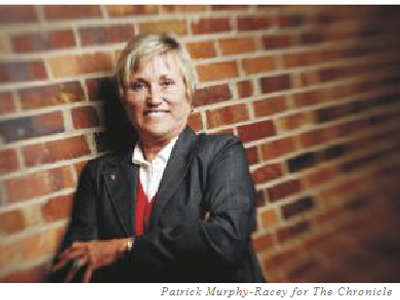
Cindy Skaruppa, vice president for enrollment management and
student services at Lincoln Memorial U., helped run an admissions
experiment there that tested 22 strategies for attracting more
applicants.
them about financial aid. Other ideas included sending pro-
spective students T-shirts listing the top 10 reasons to attend
Lincoln Memorial, creating a letter for parents of potential
applicants, and sending a DVD about campus life, along with
a calendar of events.
Each of those 22 ideas became a factor in the experiment.
QualPro then created different combinations (or “recipes”)
of those factors, which the company tested among 24 groups
of high schools in the region. That allowed the university to
determine the effectiveness of each variable, measured in
terms of applications received.
“The beauty of the design is that it has all kinds of math-
ematical possibilities,” says Charles Holland, QualPro’s
founder and a member of the university’s Board of Trustees.
“We end up determining the effects of each and every factor,
independent of other factors.”
More Numbers, ‘More Science’
For this year’s freshman class, Lincoln Memorial saw an
18-percent increase in applications over the previous year.
This fall the institution enrolled substantially more students
with ACT scores over 24, out of a possible 36.
Although Ms. Skaruppa credits some of the new strategies
for those increases, the results of the experiment surprised
her. Some ideas that she had pegged as sure-fire strategies
did not seem to work.
For instance, the results suggested that the “top 10” T-shirts
had deterred applicants. Ditto for faculty members contact-
ing prospective students, letters sent to parents, marketing
materials emphasizing the university’s distinctiveness, and a
presence on Facebook.
What helped? Recruitment outreach by the students them-
selves, for one thing. Lincoln Memorial also saw positive ef-
fects from more-frequent recruitment visits to high schools,
calling students within 24 hours of their first inquiry, and
including a letter about financial aid in a follow-up mailing to
prospective applicants.
The findings prompted Ms. Skaruppa to further adjust her
office’s strategies. This year, for instance, Lincoln Memorial
is sending parents of prospective students a link to the Web
site of its parent club. In addition, instead of sending them
just the one letter, the university is communicating more
frequently with parents, and sending them tickets to athletic
events.
“MVT helped us bring more science to the operation,” Ms.
Skaruppa says. “It also gave me some credibility. We spend
a lot of dollars on postage, but did we need to be spending so
much? Now I can answer that question.”
Lincoln Memorial’s experiment affirms that institutional
aspirations often go hand in hand with a desire for more-
sophisticated ways of analyzing data.
And, as understanding return on investment has become
more crucial, a growing number of third parties are eager to
get in on that business. QualPro, which had not previously
dabbled in higher education, hopes to attract additional
clients among colleges.